
Faith kept in every wall.
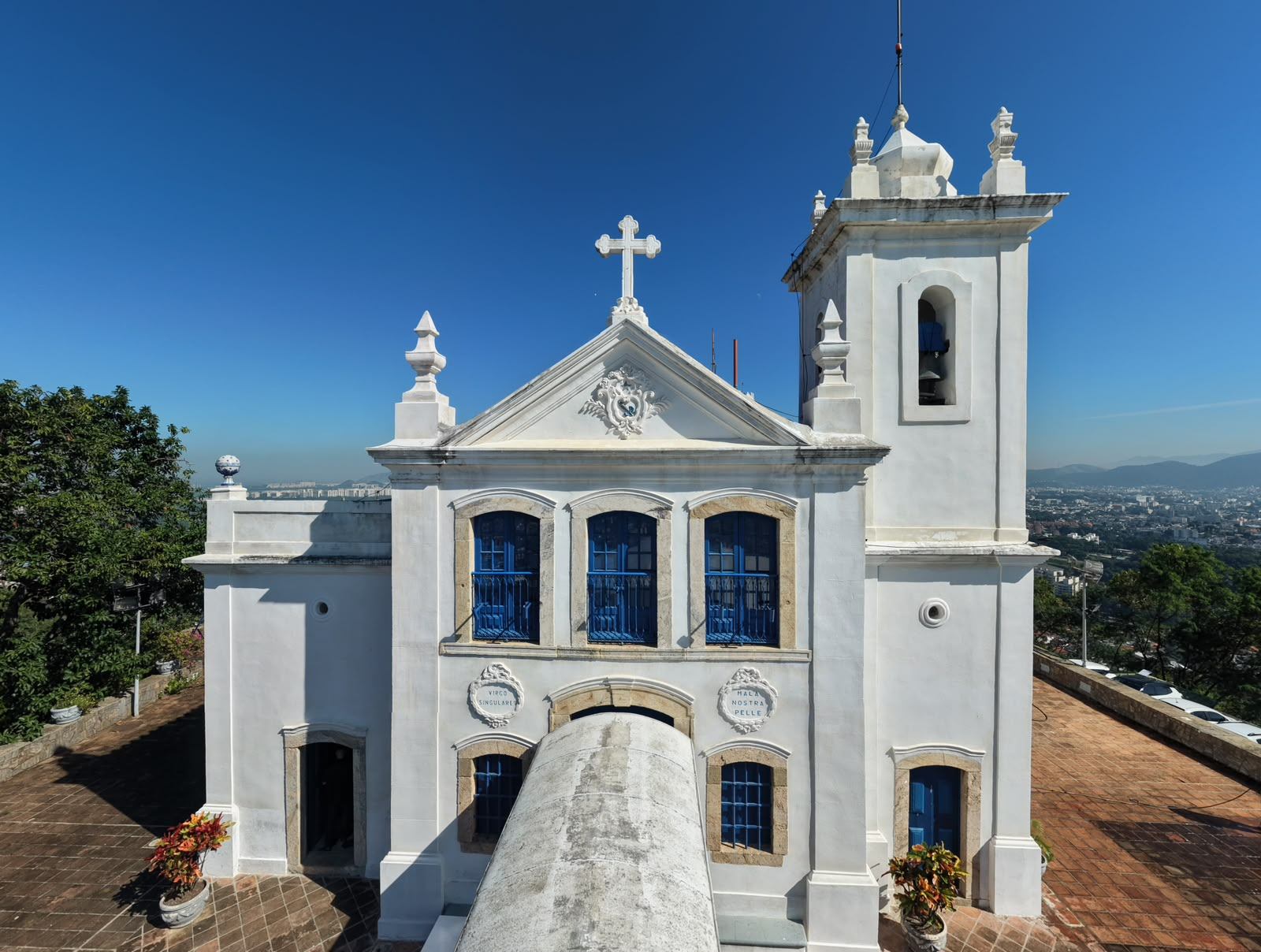
One of the oldest churches in Rio de Janeiro, listed by Brazil's National Historic Heritage.
Since 1661.
- 1661
The tradition
An enslaved man loses a cow, prays to the Virgin and sees her pointing, from the hilltop, to where the animal was. A small chapel is born there.
- 1664
The church
Father Manuel de Araújo builds the church we know today.
- 1770
The Spring
During the works, water gushes from a rock. It is the Miraculous Water Spring, which still flows today.
- 1771
The land
José Rodrigues de Aragão donates a large area around the church.
Told by the
Brotherhood.
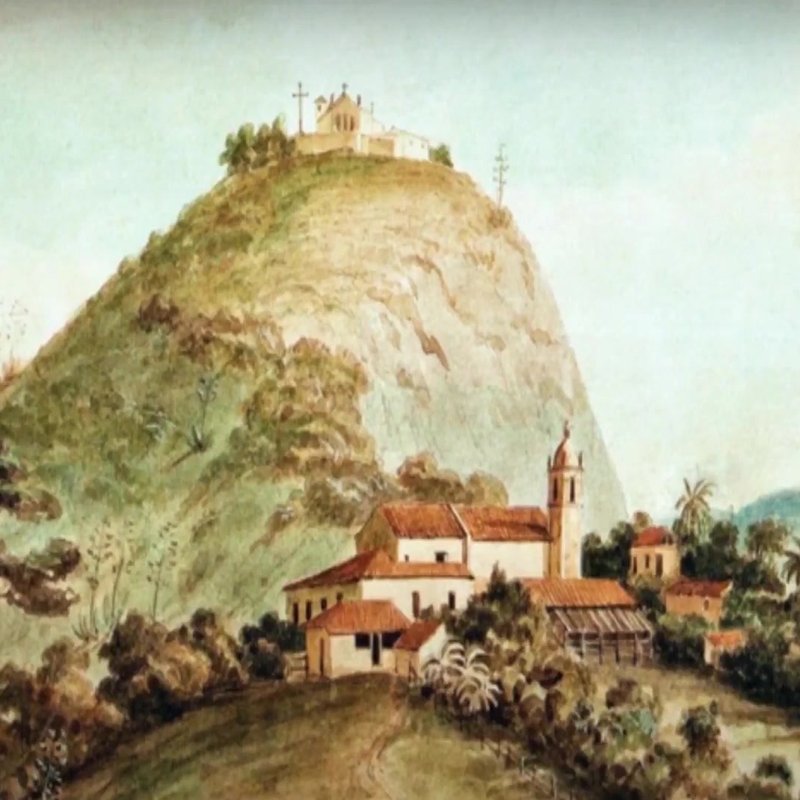
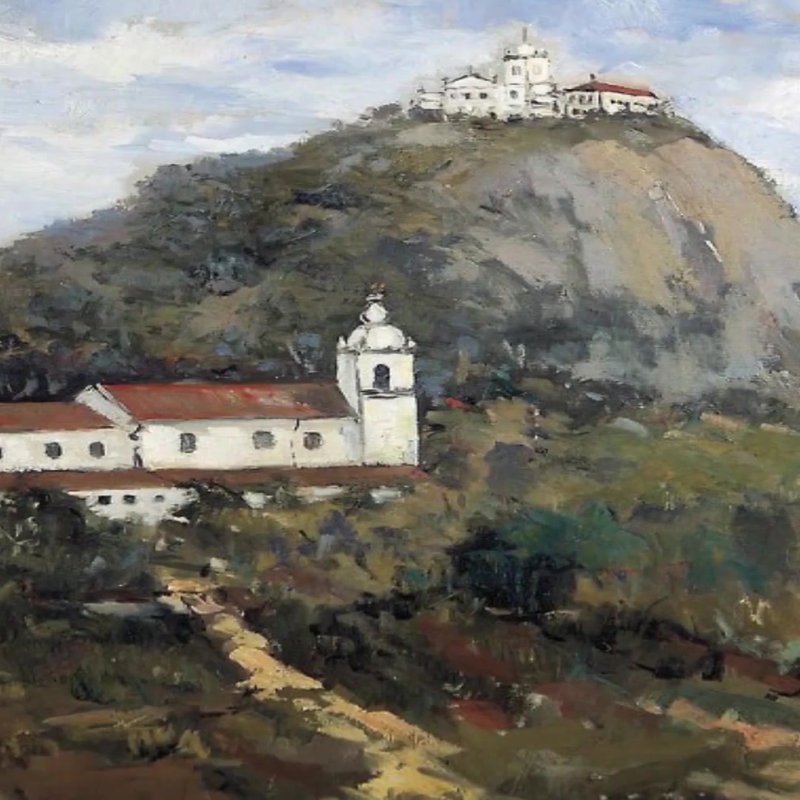
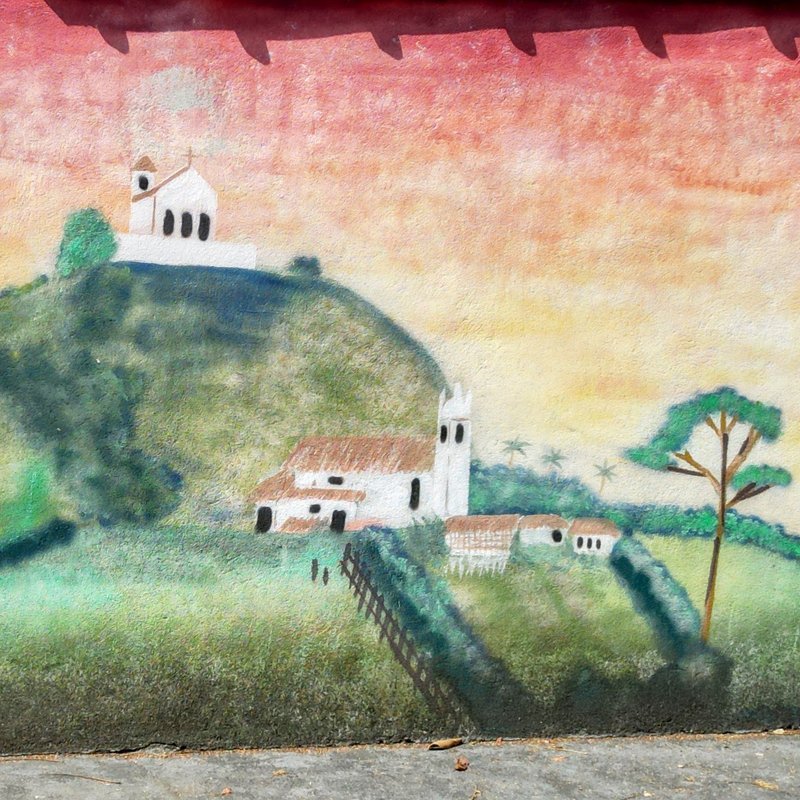
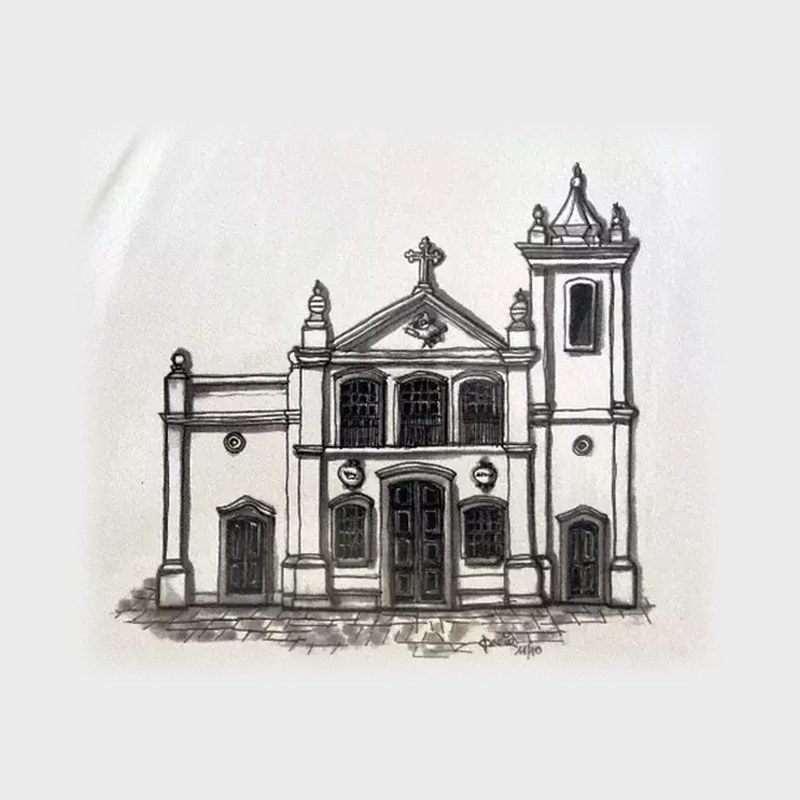
The Church of Our Lady of Penna is simply one of the oldest and most remarkable in Rio de Janeiro. Here, besides finding divine graces, you will be dazzled by the panoramic view of Jacarepaguá, which unfolds majestically 170 metres above. It is a true visual spectacle, with the Tijuca and Gávea massifs and the Guaratiba mountains framing this enchanting landscape. In the distance you can even glimpse the ocean, completing the variety of stunning scenery that belongs to the neighbourhood, always protected by the Virgin Mary.
The presence of Our Lady of Penna here dates back to 8 September 1661, when an enslaved man lost one of his master's cows and, afraid of being beaten, turned to the Virgin for protection. In the midst of his distress he had an incredible surprise: looking up at the hill, he saw the Virgin Mary pointing exactly to where the cow was. A true miracle, also witnessed by the farmer who, in gratitude, had a small chapel built on the site and freed the man. It was the first record of manumission in colonial Brazil.
In 1664, Father Manuel de Araujo built the church we know today. A sturdy building with hardwood walls, designed to withstand thunder and to protect Christians from possible pirate attacks or Indigenous arrows. It was, without doubt, a "house for praying and defending Christians". After some renovations over the years, the church remains imposing and has been listed by the National Historic Heritage. Its walls, according to Friar Agostinho, bear witness to the wonders that happened there, with various sacred objects and wax offerings fixed as memories. Every miracle of Our Lady is recorded on the walls; every grace granted leaves a keepsake.
Among the keepsakes that adorn the church walls you can find shrouds, crutches, and wax legs, bellies, arms and heads, representing people who were cured of various illnesses. There are also braids of hair, photographs, letters and even a child's little shoe, offered in thanks for prayers answered by the Virgin Mary. A special niche holds the skull of José Rodrigues de Aragão, a devout man who, after receiving a grace, donated a large area of land around the church in 1771.
Our Lady of Penna not only performed many attested miracles, but was also behind an event that had great repercussions. During work on the church in 1770, water had to be carried up with great effort. It was then that an elderly, weary enslaved man asked Our Lady of Penna for help and, to everyone's surprise, water gushed from a rock. That water still flows today and is known as the "Miraculous Water Spring".
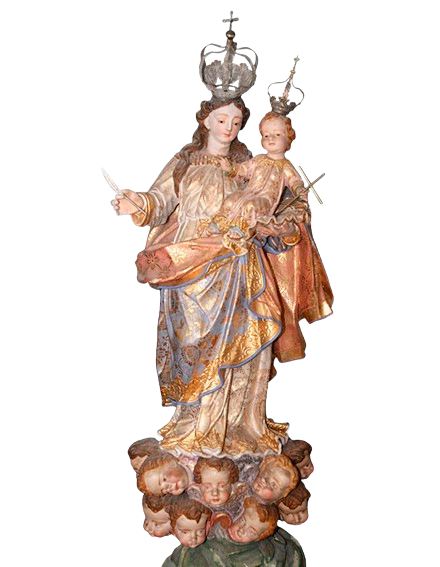
The Church of Our Lady of Penna is run by the "Venerable Brotherhood of Our Lady of Penna", made up of a dedicated group of brothers. Every year, on 8 September, the brotherhood holds a great feast in honour of the patroness, with all the pomp and solemnity she deserves. The celebrations continue on the following Sundays, turning the whole month into a celebration devoted to Our Lady of Penna, regarded as Patroness of the Arts, Sciences and the Press, as well as Protector of Jacarepaguá. The brotherhood also celebrates a Missa Compromissal every Sunday of each month at 11 a.m.
Visiting the Church of Our Lady of Penna is to plunge into a history full of faith, miracles and devotion. It is to be enchanted by the beauty of the landscape and the sacred atmosphere of a place that keeps so many memories and testimonies of the wonders worked by the Virgin Mary. Come and discover this historic and spiritual treasure, an essential part of Rio's culture.
Prayer to Our
Lady of Penna.
"Most Holy Virgin, sweetest Lady who, under the meaningful title of Penna, reign as Queen of Beauty and Love; turn your motherly gaze upon us and obtain for us the true knowledge of divine things, so that we may, all the days of our life, courageously profess the truths of the Faith, sealed with the blood of your Divine Son Jesus.
At your feet, O Virgin of Penna, let me lay the tribute of my filial reverence, breathed upon by the divine breath of your motherly caresses. And I wish to join, O Mary, my weak and humble voice to the song of nature which, around this hill, ringed by mountains and kissed by the waves of the sea, displays such beauty and such variety.
Sovereign Lady, in You I place my hopes; in life and in death hear my cries, receive my sighs. They are the cries and sighs of a child who loves you, a child who follows the fragrance of your beauty on earth, to contemplate it unveiled in the mansion of the just. Amen."
Hymn to the Lady
of Penna.
"Oh! Virgem Mãe protetora,
"Das artes e das ciências
"Vinde a nós consoladora,
"Tirai da vida a inclemência!
A vossa eterna mansão
Ornada está de mil flores
Bendizendo a saudação
Dos nossos ternos louvores!
Cantemos tudo é beleza,
O céu é todo harmonia
Com divinal singeleza
Magestoso nasce o dia!
Em bando alegre cantando
As aves em voz amena
Anunciam festejando
Nossa Senhora da Penna!"